 Nitnesh Mishra
In the modern digital landscape, software isn’t just a tool; it’s the backbone of your brand’s reputation. A single critical bug during a high-traffic launch can lead to millions in lost revenue and irreparable damage to customer trust. As development cycles accelerate, the pressure to deliver “bug-free” products has made Quality Assurance (QA) more vital than ever.
However, the challenge for many CTOs and product managers isn’t understanding the need for testing—it’s knowing how to choose a provider of software testing services that adds measurable value. With thousands of vendors claiming to be “global leaders,” how do you distinguish a high-performing partner from a low-cost provider that might increase your technical debt?
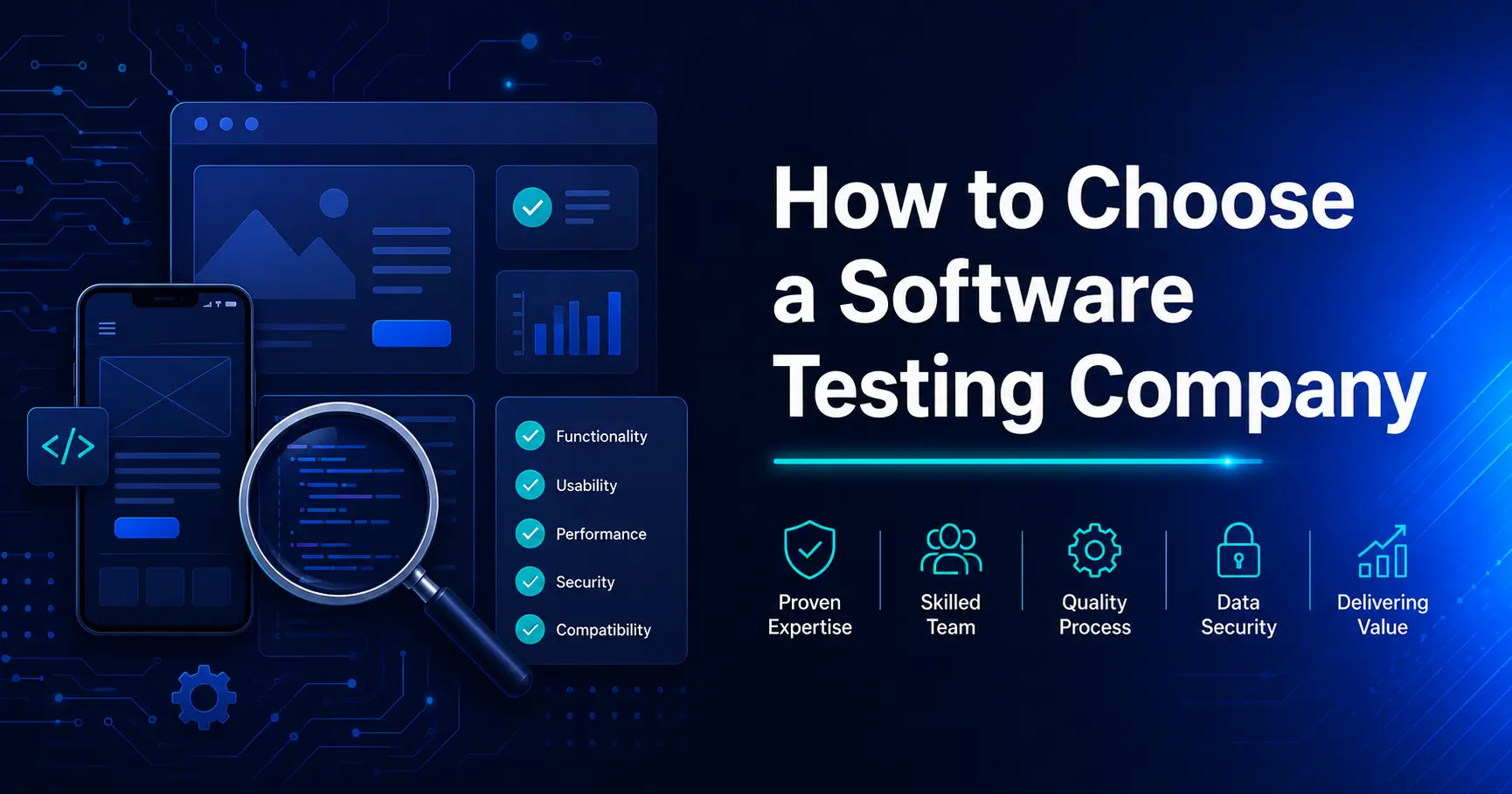
This guide provides a structured framework for evaluating potential partners based on technical depth, security, and business alignment.
1. Align the Vendor with Your Internal QA Goals
Before beginning your search, define your project’s scope to ensure you aren’t over-paying for services you don’t need—or under-scoping a complex project.
Ask yourself:
- What is the primary objective? Do you need full-cycle testing, a one-time security audit, or a transition to test automation?
- What is the project duration? Is this a short-term burst for a specific release or a long-term requirement for a dedicated QA team?
- What is your methodology? Does the vendor have proven experience in Agile, DevOps, or CI/CD environments?
Defining whether you need Manual, Automated, Security (Penetration), or Performance testing allows you to filter out generalist vendors that lack specialized expertise.
2. Verify Domain Expertise and Industry-Specific Knowledge
Technical skills are essential, but domain knowledge prevents business-logic errors. A QA company that specializes in gaming might struggle with the complex regulatory requirements of FinTech or MedTech applications.
When vetting potential partners, look for:
- Industry Compliance: Do they understand standards like HIPAA (Healthcare), PCI-DSS (Finance), or GDPR?
- Relevant Portfolio: Request case studies involving projects of similar scale and complexity to your own.
- Certified Professionals: Ensure their testers hold ISTQB (International Software Testing Qualifications Board) certifications, which serve as a global benchmark for testing excellence.
3. Assess Technical Stack and Infrastructure
A top-tier QA partner should act as a technical consultant, not just “extra hands.” They should integrate seamlessly with your existing infrastructure.
- The Toolset: Inquire about their proficiency with modern frameworks like Selenium, Playwright, Cypress, or Appium.
- AI Integration: The best vendors use AI-driven testing tools to increase test coverage and reduce the long-term cost of maintenance.
- Real Device Labs vs. Emulators: While emulators are useful early on, they cannot replicate real-world conditions like battery drain or network fluctuations. Ensure your partner has a comprehensive real-device lab for final validation.
4. Prioritize Security, Data Privacy, and Intellectual Property
Outsourcing QA grants an external entity access to your proprietary source code and sensitive user data. Security is the most critical “hidden” selection criterion.
Ensure the vendor adheres to:
- Security Certifications: Look for ISO 27001 or SOC2 Type II compliance.
- Legal Protection: Confirm that robust Non-Disclosure Agreements (NDAs) and clear Intellectual Property (IP) ownership clauses are standard.
- Data Masking: Ask how they handle test data. They should use obfuscation techniques to ensure no “live” customer data is ever exposed in the testing environment.
5. Evaluate Communication and Cultural Alignment
Communication friction is a leading cause of project delays. If your vendor is in a different time zone and lacks a transparent reporting culture, your development cycle will stall.
A reliable QA partner offers:
- Time Zone Overlap: Ideally, you should have at least 3–4 hours of synchronous working time for daily stand-ups.
- Transparent Tooling: You should have direct access to their bug-tracking systems (Jira, Azure DevOps) and communication channels (Slack, Teams).
- Proactive Feedback: The best testers don’t just report bugs; they suggest UI/UX improvements and identify potential bottlenecks before they happen.
6. Understand Outsourcing Cost Models (ROI vs. Rate)
While price is a factor, the lowest hourly rate often yields the highest “Total Cost of Quality” due to rework. Compare these common models:
- Time & Materials (T&M): Best for Agile projects where requirements evolve frequently.
- Fixed Price: Suitable for small, well-defined projects with a rigid scope.
- Dedicated Team: Best for long-term partnerships where the testers become a seamless extension of your in-house engineering department.
Expert Tip: Focus on the ROI of Automation. A vendor that automates regression suites may have a higher setup cost but will significantly lower your cost-per-test over time.
7. Identify “Red Flags” During the Selection Process
Be wary of vendors that exhibit these warning signs:
- Guarantees of “100% Bug-Free” Software: This is a technical impossibility; professional vendors speak in terms of “risk mitigation.”
- Vague Case Studies: If they cannot provide specific metrics (e.g., “reduced regression time by 40%”), they may be inflating their experience.
- High Employee Turnover: Consistent quality requires team stability. Ask about their internal retention rates.
- Refusal of a PoC: A confident vendor should be willing to perform a Proof of Concept (PoC) to demonstrate their workflow before you sign a long-term contract.
Conclusion
Choosing the right software testing company is a strategic business decision. By prioritizing domain expertise, security protocols, and cultural fit over the lowest bid, you protect your product and your bottom line.
Before committing to a multi-year partnership, we recommend starting with a Pilot Project. This allows you to evaluate their technical depth and communication style in a real-world scenario.
You Might Also Like