 Lalit Nagar
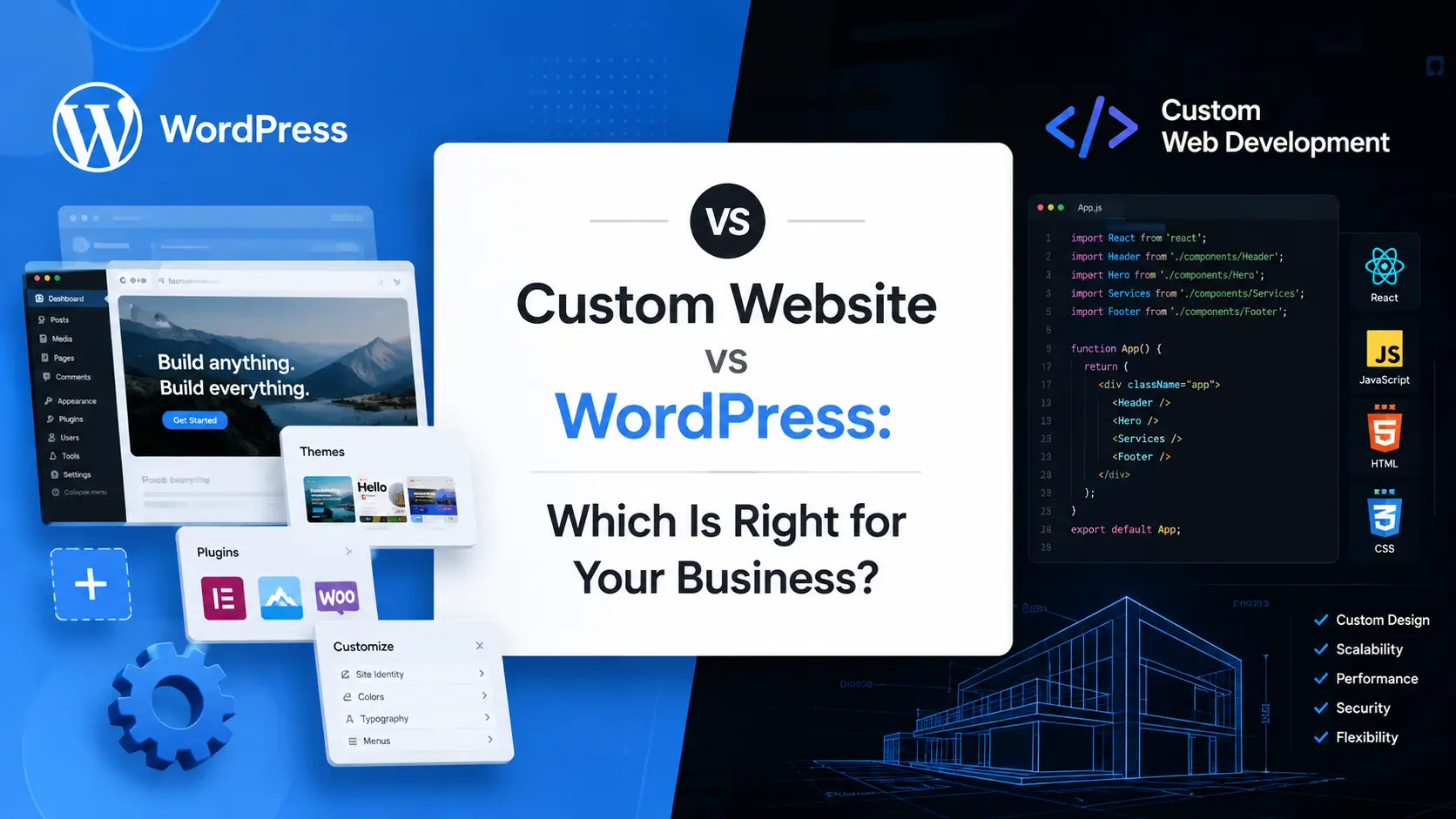
Choosing the right platform for your business website is a foundational digital strategy decision. It’s the difference between building on “rented” land or owning your digital infrastructure. Most business owners eventually face the same dilemma: Should you use the massive ecosystem of WordPress, or invest in custom web development?
The choice isn’t just about aesthetics or upfront costs; it’s about scalability, security, and long-term Return on Investment (ROI). This guide breaks down the “Custom Website vs. WordPress” debate, analyzing technical performance and the Total Cost of Ownership (TCO) to help you make an informed investment.
The WordPress Powerhouse: A Versatile, Ready-to-Market Solution
WordPress currently powers over 43% of the internet. For many SMEs, it is the default choice because it offers a “ready-to-wear” solution that balances functionality with ease of use.
Why Businesses Choose WordPress:
- Rapid Deployment: Unlike custom builds that take months, a professional WordPress site can be launched in weeks.
- The Plugin Ecosystem: With 50,000+ plugins, you can add features like SEO tools or e-commerce capabilities via WooCommerce without writing code.
- User Autonomy: WordPress is designed for non-technical users. Your marketing team can update blogs and landing pages without needing a developer for every minor change.
If you are looking for a platform that allows you to launch quickly and manage content in-house, the most logical step is to build your site on WordPress, leveraging its vast community of support and pre-built features.
Custom Web Development: The High-Performance Bespoke Asset
While WordPress is a versatile CMS, custom web development is a superior solution built from the ground up to fit your specific business logic. This approach is ideal for businesses that have outgrown the limitations of standard templates.
The Strategic Advantages of Custom Builds:
- Unique Brand Identity: You aren’t confined by theme templates. Every pixel is designed to enhance your unique User Experience (UX) and brand story.
- Superior Speed & Performance: Custom sites include only the code necessary for your business. This results in lean, lightning-fast load times—a critical factor for Google’s Core Web Vitals.
- Advanced Integration: Beyond basic website features, enterprise-level organizations often require bespoke software solutions to handle proprietary data, complex API integrations, and unique customer portals that standard plugins cannot facilitate.
SEO & Performance: Which Ranks Higher?
Search engines prioritize user experience. While both platforms can rank well, they offer different paths to the top of the Search Engine Results Pages (SERPs).
The WordPress SEO Challenge
WordPress is “SEO-friendly” out of the box, but it is fragile. Every plugin adds server requests, which can slow down your Largest Contentful Paint (LCP). To stay competitive, WordPress users often need extra layers of optimization, such as heavy caching and image compression.
The Custom SEO Edge
In custom development, SEO is structural. Developers can prioritize Clean Code Indexing, making it easier for search engine bots to crawl your site. Because custom sites generally score higher on PageSpeed Insights, they often have a natural advantage in competitive industries where every millisecond counts.
Security & Maintenance: The Hidden Risks
In today’s digital landscape, security is a primary business concern.
- The Target Factor: WordPress is the most attacked CMS globally. Most breaches occur because of outdated plugins or themes. According to Sucuri’s Website Threat Report, vulnerabilities in third-party components are the #1 entry point for hackers.
- The “Maintenance Tax”: To keep WordPress secure, you must perform weekly updates. If a plugin update clashes with your theme, your site could experience downtime.
- Security through Obscurity: Custom websites are much harder to target with automated bots. Since the code is proprietary, there are no public “vulnerability databases” for hackers to exploit, making custom builds a safer choice for high-security industries.
Total Cost of Ownership (TCO): A 3-Year Comparison
To understand the true cost of your digital presence, you must look beyond the initial invoice. Many businesses fall into the trap of only comparing the build price without considering the long-term maintenance, hosting, and security costs.
Before committing to a platform, it is highly recommended to perform a detailed cost analysis for web projects over a three-year horizon. This will reveal that while a custom build has a higher upfront cost, its lower “technical debt” and maintenance requirements often make it the more cost-effective choice in the long run.
| Feature | WordPress (CMS) | Custom Development |
| Initial Cost | Low ($2k – $10k) | High ($15k – $50k+) |
| Speed to Market | 2–6 Weeks | 3–6 Months |
| Maintenance | High (Weekly updates/fixes) | Low (Server-side only) |
| Life Span | 2–3 Years (Theme obsolescence) | 5–7+ Years |
Decision Matrix: Which Platform Fits Your Business?
Choose WordPress If:
- You are a startup testing a Minimum Viable Product (MVP).
- You have a limited initial budget (under $5,000).
- Your primary focus is content marketing and daily blogging.
- You need to launch a functional site immediately.
Choose Custom Development If:
- You require specialized functionality (e.g., custom booking engines, internal tools).
- You operate in a high-security industry where data privacy is paramount.
- You are an established brand aiming to dominate a competitive SEO niche through site speed.
- You want a permanent digital asset that won’t require a total rebuild in two years.
Conclusion: Making the Right Digital Investment
In the Custom Website vs. WordPress debate, the right answer depends on your business stage. WordPress is the hero of accessibility and speed, perfect for small businesses and content-heavy sites. However, for organizations that view their website as a proprietary tool, custom development is the superior long-term investment for performance and security.
Ready to build your next-level digital presence?
Whether you need a high-performance WordPress site or a bespoke custom build, our team can help you navigate the technical requirements. Contact us for a free strategy audit today.