 Sumit Yadav
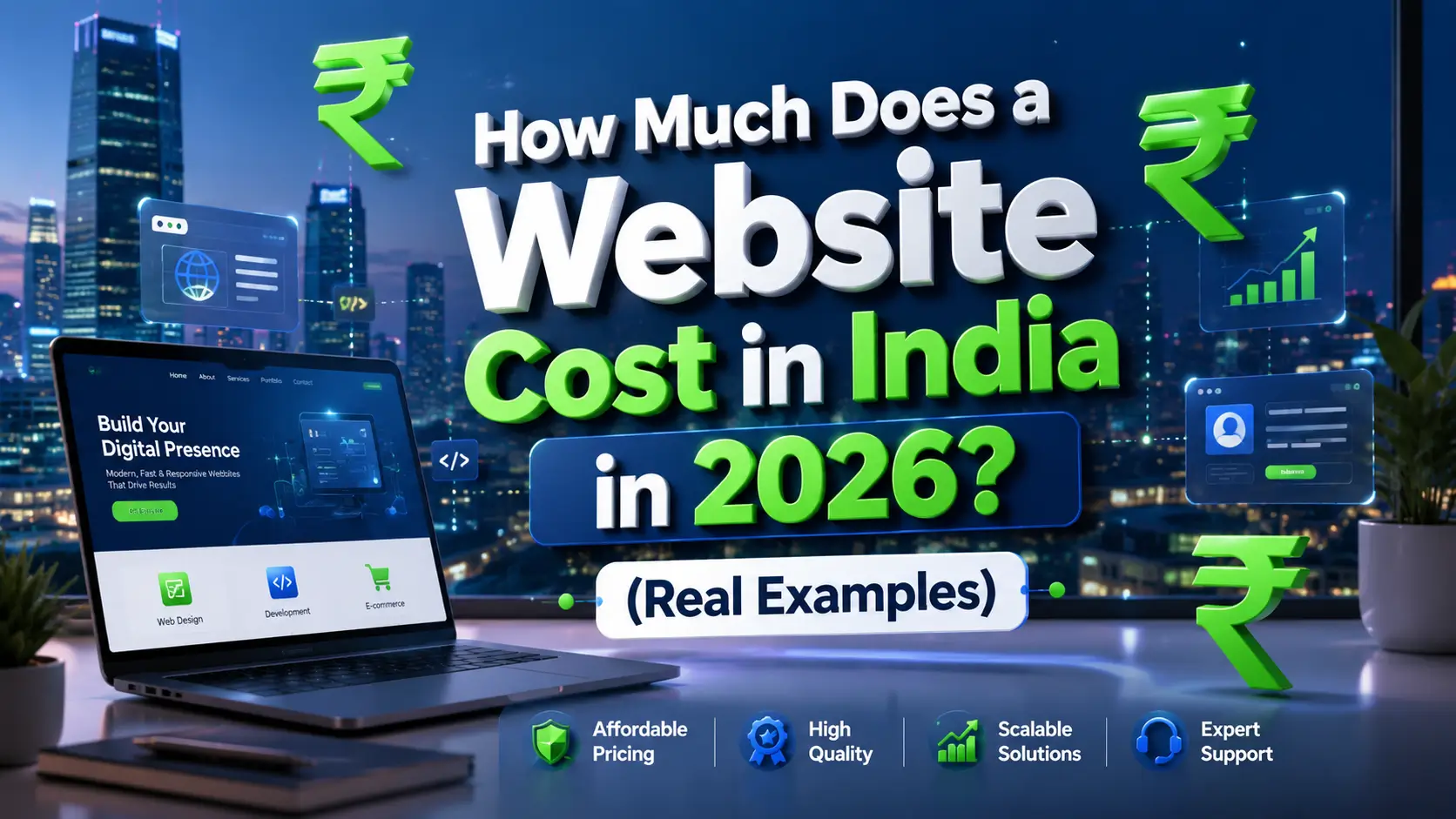
In the digital landscape of 2026, the question “How much does a website cost in India?” has fundamentally changed. The era of the ₹5,000 “static template” is effectively over, replaced by a demand for high-performance, AI-integrated, and legally compliant digital assets. As India continues its journey as a global tech powerhouse, the domestic market has matured. Indian business owners no longer want “just a website”; they want a conversion engine that ranks on the first page of Google and offers a seamless user experience.
Today, your website is more than a digital brochure; it’s a 24/7 automated salesperson, a customer support hub, and a data-gathering tool. For businesses planning their digital strategy, understanding the total website development cost in India is the first step toward building a high-ROI online presence. This guide breaks down the costs, tech trends, regional variations, and real-world examples to help you budget effectively for the year 2026.
1. Key Drivers of Website Pricing in 2026
Before looking at the raw numbers, it is vital to understand the “hidden” technology shifts driving costs this year. Development is no longer just about HTML and CSS; it is about infrastructure and intelligence.
The AI Integration Factor
In 2026, AI is a standard requirement. Most businesses now integrate Custom AI Chatbots trained on their own proprietary company data rather than generic bots. These bots don’t just answer questions; they can process orders, book appointments, and provide personalized product recommendations in real-time.
- Customer Support AI: Automated handling of 80% of queries.
- Generative UI: Interfaces that change layout or content based on individual user behavior.
- Estimated Add-on: Integration of these features typically adds ₹30,000 – ₹80,000 to the baseline project.
Headless Architecture & Performance
Traditional page loads are now considered too slow for modern SEO. Most professional agencies have moved toward Headless CMS (like Strapi or Contentful) and Next.js frameworks. These technologies decouple the front-end (the design) from the back-end (the data), ensuring that mobile users on 5G networks get instantaneous load times. While these offer superior Core Web Vitals scores, they require specialized developers, which increases the initial development price by roughly 30%.
Data Privacy & DPDP Compliance
The Digital Personal Data Protection (DPDP) Act is now fully enforced across India. This means every website—regardless of size—must have robust consent management, clear privacy policy triggers, and encrypted data handling protocols. Ensuring your site is legally compliant is no longer optional; it is a specialized service that developers include in the total project cost to protect you from heavy government penalties.
2. 2026 Website Cost Breakdown: Pricing Tiers
The following categories provide a snapshot of current market rates. For brands selling online, calculating ecommerce website development costs involves looking at payment gateways, inventory sync, and multi-channel integration.
| Website Category | Estimated Investment | Ideal For | Key Deliverables |
| Personal/Portfolio | ₹15,000 – ₹35,000 | Freelancers, Artists, Consultants | 1-3 Pages, Mobile-Responsive, WhatsApp Integration |
| Small Business (SMB) | ₹40,000 – ₹85,000 | Local Services, Startups, NGOs | 10 Pages, SEO-Ready, Lead Gen Forms, Blog |
| E-commerce (D2C) | ₹90,000 – ₹3,50,000 | Online Retailers, Fashion Brands | Payment Gateways, Inventory Sync, AI Upselling |
| Custom Enterprise | ₹10,00,000+ | SaaS, FinTech, Large Corps | Custom API, Scalable Cloud, High-Grade Security |
3. Platform Comparison: Choosing the Right Foundation
A significant part of your total investment depends on the platform you choose. In 2026, the market is split between “No-Code/Low-Code” and “Custom Development.”
- WordPress/WooCommerce: Still the king of CMS due to its massive plugin ecosystem. It is cost-effective but requires high-quality hosting and regular maintenance to remain secure against modern cyber threats.
- Shopify: The go-to for D2C brands. While it simplifies the initial setup, the monthly subscription fees and app costs can result in a higher long-term expenditure compared to open-source alternatives.
- Framer/Webflow: These platforms are trending for high-end “visual” websites. They offer designer-level polish and incredible animations but come with higher monthly hosting fees and less flexibility for complex back-end logic.
- Custom MERN Stack: (MongoDB, Express, React, Node) This is the “Gold Standard” for performance and security. It is the most expensive option but offers 100% flexibility and full ownership of the intellectual property.
4. Real-World Examples: What Indian Businesses are Paying
To provide transparency, let’s look at three realistic scenarios from the current Indian market.
Case Study A: The D2C Skincare Brand (Bangalore)
- The Need: A high-speed online store with a custom “Skin-Type AI Quiz” to increase engagement.
- The Solution: A Shopify Plus setup with a custom-coded React frontend.
- Total Investment: ₹1,90,000.
- The Result: The brand saw a 25% increase in mobile conversion rates within three months due to frictionless checkout and personalized recommendations.
Case Study B: The Industrial Manufacturer (Pune)
- The Need: A professional corporate site to attract international B2B clients and showcase heavy machinery via 3D models.
- The Solution: A multi-page WordPress build using high-end custom themes and technical SEO.
- Total Investment: ₹75,000.
- The Result: Reduced bounce rates by 40% and improved lead quality from European and North American markets.
Case Study C: The FinTech Startup (Gurgaon)
- The Need: A high-security web portal with real-time loan tracking, KYC verification, and UPI integration.
- The Solution: A custom-built web application using a secure cloud infrastructure.
- Total Investment: ₹14,50,000.
- The Result: Successfully passed third-party security audits and handled over 50,000 concurrent users during launch.
5. Regional Price Variance in India
Interestingly, where your developer is located in India still influences the price, though the gap is closing due to the rise of remote specialized agencies.
- Tier-1 Cities (Bangalore, Mumbai, Delhi, Gurgaon): Expect to pay a 20-30% premium. Agencies here often have more experience with high-end tech stacks, international compliance, and enterprise-grade security.
- Tier-2 Cities (Pune, Hyderabad, Chennai, Ahmedabad): These cities offer the best balance of quality and price. Many top-tier agencies have moved their operations here to reduce overhead while maintaining a highly skilled workforce.
- Tier-3 Cities & Freelance Hubs (Indore, Kochi, Jaipur): You can find exceptional value here. For a standard small business site, budgets might be significantly lower when working with talented independent professionals in these emerging tech hubs.
6. The “Invisible” Expenses: Recurring Maintenance Costs
Building the site is only Phase 1. To keep your digital asset healthy and visible, you must budget for these annual recurring costs:
- Managed Cloud Hosting: Standard shared hosting is largely obsolete for professional SEO. High-performance hosting (AWS, Google Cloud, or DigitalOcean) costs ₹10,000 – ₹30,000/year.
- Annual Maintenance Contracts (AMC): Most reputable agencies charge 15-20% of the initial project cost annually. This covers security patches, database backups, and software updates.
- AI API Fees: If your site uses external Language Models (like OpenAI) for its chatbot, expect a monthly usage fee of ₹1,500 – ₹8,000, depending on your traffic volume.
- Content & SEO Retainers: To maintain rankings for competitive keywords, professional SEO services in India typically range from ₹25,000 to ₹60,000 per month.
7. Hiring Strategy: Agency vs. Freelancer
Who you hire will be the biggest factor in your final project quote and the quality of the end product.
Hiring a Freelancer
- Best For: Smaller budgets, personal portfolios, or simple landing pages.
- Pros: Highly cost-effective and agile communication.
- Cons: You may need to hire separate people for design, coding, and content writing.
Hiring a Web Development Agency
- Best For: E-commerce, complex business logic, and brands that need a long-term strategic partner.
- Pros: You get a full team (UI/UX Designer, Front-end Developer, Back-end Developer, SEO Expert, and Project Manager).
- Cons: Higher upfront cost, but usually results in a lower “total cost of ownership” due to better build quality and fewer bugs.
8. Pre-Hire Checklist: 5 Questions to Avoid Overpaying
Before you sign a contract for web design in India, ensure you have clear answers to these critical questions:
- Ownership: Will I have 100% ownership of the source code and domain, or am I tied to a proprietary system?
- Scalability: Can this tech stack handle a 500% increase in traffic if my business scales?
- Speed Guarantee: Will the site pass the Google “Core Web Vitals” assessment on mobile devices?
- Security: How will my customer data be stored to comply with the DPDP Act?
- Post-Launch Support: What is the turnaround time for critical site errors under the maintenance agreement?
Conclusion
In 2026, the cost of a website in India reflects the increasing complexity and value of the internet economy. While you can still find budget-friendly options for small projects, businesses that want to scale must look at their website as a strategic investment rather than a one-time expense.
Your website is your only 24/7 representative. By budgeting for quality design, AI functionality, and robust security, you ensure your business remains at the forefront of India’s fast-paced digital future.
You Might Also Like