 Akshay Tyagi
In a market defined by the “Amazon Effect,” real-time tracking and lightning-fast delivery are no longer optional—they are the standard. However, as global supply chains face increasing volatility, legacy systems are evolving from simple inconveniences into significant business liabilities.
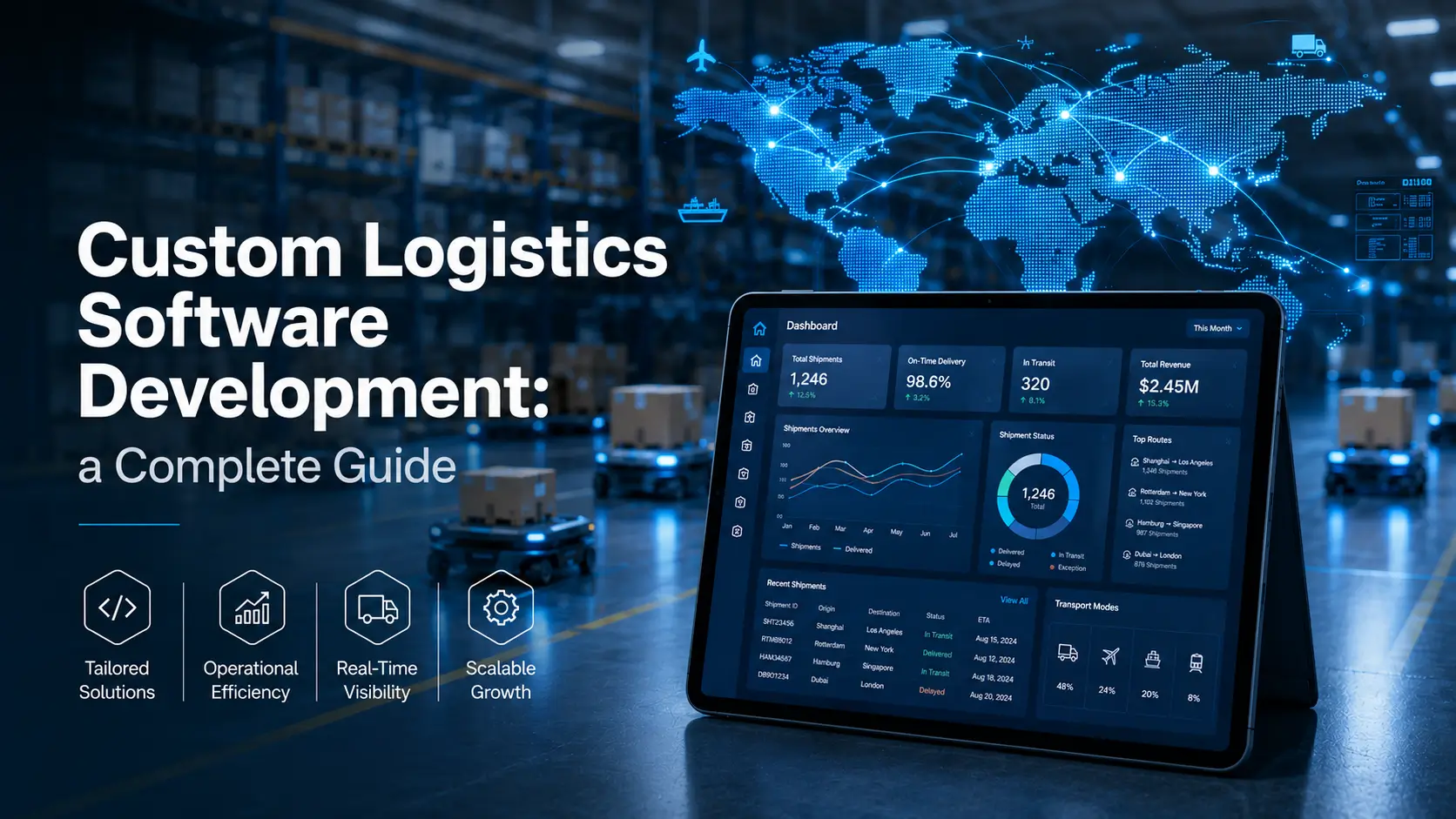
For many firms, the path forward involves a critical choice: continue struggling with rigid, off-the-shelf apps or invest in specialized logistics software development services. This guide explores how tailor-made solutions provide the visibility, automation, and competitive edge necessary to thrive and beyond.
Why Custom Logistics Software is the New Industry Standard
Historically, many logistics companies relied on generic Software-as-a-Service (SaaS) platforms. While these offer a quick setup, they often force businesses to warp their proven workflows to fit the software’s limitations.
The Shift Toward Intelligent Automation
The industry is moving from simple “digitization” to intelligent automation. According to [External Link: Gartner Supply Chain Research], investment in supply chain technology is expected to double by 2026. Companies are realizing that generic tools cannot handle the complexity of modern omnichannel distribution.
The Custom Advantage: When you build a custom solution, you own the source code and the data. In an era where data-driven insights determine market share, proprietary software is your most valuable strategic asset.
Strategic Benefits of Tailor-Made Logistics Solutions
Investing in a custom build isn’t just about replacing paper; it’s about a long-term commitment to improve operational efficiency through three core pillars:
- Seamless Integration: A custom solution acts as a “single pane of glass,” connecting your Custom ERP Systems, accounting tools, and GPS hardware via specialized APIs.
- Infinite Scalability: Unlike SaaS models that charge “per-user” or “per-vehicle” fees, custom software grows with your fleet without increasing your monthly overhead.
- Proprietary Route Optimization: Custom algorithms can factor in niche variables—like specific vehicle weight limits or hazardous material regulations—that generic tools overlook.
- Measurable Impact: Research from the ARC Advisory Group suggests that optimized routing can reduce total mileage by up to 20%, directly lowering fuel costs and carbon footprints.
Core Modules: Building Your Logistics Ecosystem
A modern logistics platform is an ecosystem of integrated modules. When planning your custom architecture, consider these essential components:
1. Transportation Management System (TMS)
The “brain” of your operation. It handles freight auditing, carrier selection, and load planning to ensure every vehicle is utilized at maximum capacity.
2. Warehouse Management System (WMS)
Beyond inventory tracking, a custom WMS enables automated picking paths and real-time SKU management to prevent costly stockouts.
3. Fleet Management & Telematics
Monitor vehicle health and driver behavior. This module is vital for safety compliance and reducing maintenance costs through [Internal Link: Predictive Maintenance Technology].
4. Last-Mile Delivery & ePOD
The “last mile” is the most expensive part of the journey. Custom mobile apps allow for real-time customer tracking and electronic Proof of Delivery (ePOD), drastically reducing customer service disputes.
Custom vs. Off-the-Shelf: Which is Right for You?
| Feature | Off-the-Shelf Software | Custom Logistics Software |
| Initial Cost | Lower upfront cost | Higher initial investment |
| Long-term Cost | Perpetual subscription fees | Zero licensing fees; high TCO efficiency |
| Customization | Limited to vendor updates | Fully tailored to your workflows |
| Data Ownership | Data often hosted by vendor | Full ownership and security control |
The Step-by-Step Development Roadmap
Building high-performance logistics software requires a disciplined, phase-based approach:
- Discovery & Process Mapping: We identify manual bottlenecks by analyzing your current supply chain workflow.
- UI/UX Design: Dashboards must be intuitive for dispatchers, while driver apps must be “glanceable” and functional in low-light environments.
- Cloud-Native Development: Most modern platforms utilize AWS or Azure to ensure 99.9% uptime and global accessibility.
- Rigorous QA Testing: We stress-test the system to ensure it performs during peak seasons, such as Black Friday or Cyber Monday.
- MVP Launch & Iteration: Launching a Minimum Viable Product (MVP) allows you to gather driver feedback and refine features before a full-scale rollout.
Future-Proofing: AI, IoT, and Blockchain
To remain competitive, your software must leverage “Industry 4.0” technologies:
- Artificial Intelligence (AI): McKinsey reports that AI in logistics can add up to $2 trillion in value annually through predictive demand forecasting.
- Internet of Things (IoT): Sensors provide real-time data on temperature and humidity—essential for the pharmaceutical and food industries (Cold Chain logistics).
- Blockchain: Smart contracts can automate carrier payments and create an immutable record of shipping documents, eliminating billing fraud.
Estimating the Cost of Custom Logistics Development
The cost of developing custom logistics software varies based on complexity. While a specialized module may take 3–4 months to deploy, a full-scale enterprise TMS/WMS integration may take 9 months or more.
However, by focusing on an MVP approach—automating the highest-friction process first—most businesses begin seeing a return on investment within the first few months of launch.
Conclusion
In the high-stakes world of global logistics, your software should be an engine for growth, not a hurdle. Custom development allows you to stop fighting against rigid tools and start using technology as a competitive weapon.
You Might Also Like