 Akshay Tyagi
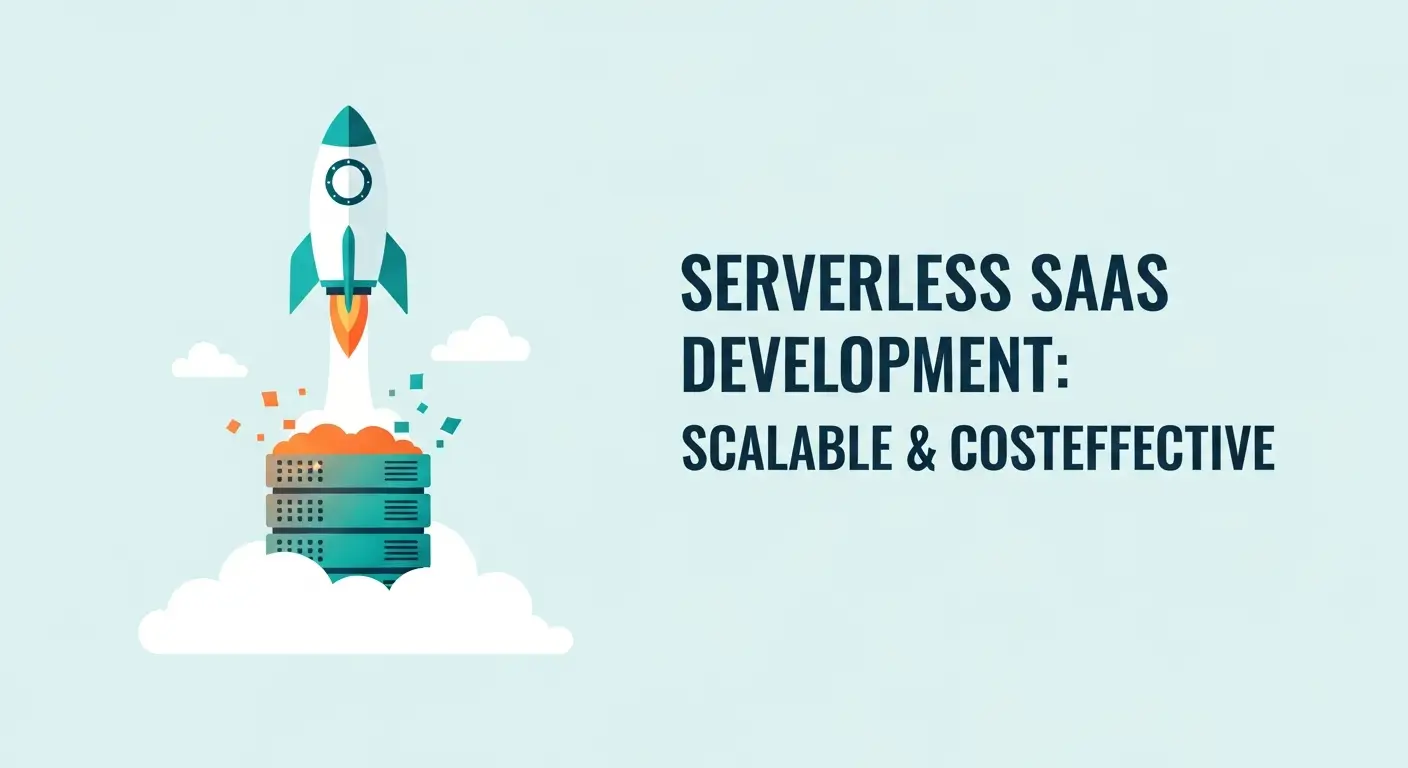
In the highly competitive landscape of the digital economy, SaaS founders and CTOs face a perpetual dilemma: How do you build a product that can handle millions of users without burning through your capital on idle infrastructure? The answer lies in a paradigm shift that is redefining cloud computing. Welcome to the era of Serverless SaaS Development.
Gone are the days when launching a web application meant provisioning bulky servers, managing complex patches, and paying for computing power you weren’t using at 3 AM. Serverless architecture offers a modern, streamlined alternative that focuses on code, not operations.
In this guide, we will dive deep into why serverless is the ultimate game-changer for SaaS startups and enterprises alike. We will explore how it drives down costs, ensures infinite scalability, and accelerates your time-to-market.
What is Serverless SaaS Development?
Before we analyze the benefits, let’s demystify the terminology. “Serverless” is somewhat of a misnomer. Servers still exist; however, as a developer or business owner, you no longer have to manage them.
Serverless SaaS development refers to building and running applications where a cloud provider (like AWS, Microsoft Azure, or Google Cloud) acts as the server, dynamically managing the allocation of machine resources. Pricing is based on the actual amount of resources consumed by an application, rather than on pre-purchased units of capacity.
In a traditional setup, you rent a car (server) regardless of whether you drive it. In a serverless model, you are using a taxi service—you only pay for the distance you travel.
The Core Components
- FaaS (Function as a Service): This is the heart of serverless (e.g., AWS Lambda). You write individual functions (snippets of code) that run in response to events.
- BaaS (Backend as a Service): Third-party services that handle backend aspects like authentication (Auth0), database management (Firebase), or storage (Amazon S3).
Why Serverless is Cost-Effective
One of the primary keywords for success in the SaaS world is “burn rate.” Traditional cloud infrastructure can be a silent killer of budgets. Here is why serverless is the superior financial choice for growing companies.
1. The Pay-As-You-Go Model
In a monolithic architecture hosted on virtual machines (VMs), you must provision for peak traffic. If you expect a spike on Black Friday, you pay for that capacity all month long.
With serverless SaaS solutions, you are charged based on execution duration and the number of requests. If no one visits your app between 2:00 AM and 6:00 AM, your infrastructure cost for that period is effectively zero. This granular billing model is revolutionary for startups operating on lean budgets.
2. Elimination of DevOps Overhead
Hardware management, operating system updates, and security patching require a dedicated DevOps team. By shifting these responsibilities to the cloud provider, you significantly reduce personnel costs. Your engineering team can focus on feature development rather than server maintenance.
Achieving Hyper-Scalability with Serverless Architecture
Scalability is often the metric that breaks a SaaS platform. When your user base grows from 100 to 100,000 overnight due to a viral marketing campaign, traditional servers can crash under the load, leading to downtime and churn.
Serverless architecture handles this inherently:
- Automatic Scaling: Serverless functions are stateless and ephemeral. When traffic spikes, the cloud provider automatically spins up thousands of concurrent instances of your function to handle the requests. When traffic subsides, those instances vanish.
- Global Availability: Most serverless providers offer Edge locations. This means your code can run closer to the user, reducing latency and ensuring a snappy experience regardless of geography.
No More “Over-Provisioning”
Founders often fall into the trap of over-provisioning infrastructure “just in case.” This leads to wasted resources. Serverless eliminates the guesswork. You scale up precisely when needed and scale down immediately after.
Accelerating Time-to-Market (TTM)
In the SaaS industry, speed is a feature. The first to market often captures the lion’s share of users. Serverless SaaS development is a catalyst for rapid deployment.
Focus on Business Logic, Not Infrastructure
Because developers don’t need to spend weeks configuring environments, setting up load balancers, or installing container orchestration tools like Kubernetes, they can start writing business logic immediately.
Modular Microservices
Serverless promotes a microservices architecture. By breaking the application into small, independent functions, different teams can work on different features simultaneously without blocking each other. This parallel development cycle significantly shortens the roadmap from concept to launch.
Key Challenges (and How to Solve Them)
While the benefits are immense, an honest assessment of serverless development must include its challenges. However, with experienced engineering, these hurdles are easily surmountable.
1. The “Cold Start” Problem
When a specific function hasn’t been called in a while, the cloud provider spins it down. The next time it is called, there is a slight delay (latency) while the container initializes.
- The Fix: Use “Provisioned Concurrency” (on AWS) to keep a baseline of functions warm, or use lightweight coding languages like Node.js or Go to minimize initialization time.
2. Vendor Lock-In
Relying heavily on specific offerings (like AWS DynamoDB or Azure Functions) can make it difficult to switch providers later.
- The Fix: Utilize the Serverless Framework or Terraform. These are infrastructure-as-code tools that abstract away the underlying provider, making your code more portable.
3. Monitoring and Debugging
Tracing a bug through hundreds of ephemeral functions can be harder than debugging a monolith.
- The Fix: Implement robust observability tools like Datadog, New Relic, or AWS X-Ray from day one. These tools provide distributed tracing to visualize the request path across your microservices.
Serverless vs. Containers vs. VMs: A Quick Comparison
To help you decide if this path is right for your SaaS, let’s look at a comparative breakdown:
| Feature | Virtual Machines (EC2) | Containers (Kubernetes) | Serverless (Lambda) |
| Management | High (OS + App) | Medium (Cluster mgmt) | None (Code only) |
| Scalability | Slow (Minutes) | Fast (Seconds) | Instant (Milliseconds) |
| Cost | Fixed / Reserved | Fixed / Reserved | Pay-per-use |
| Idle Cost | 100% | 100% | 0% |
| Best Use Case | Legacy Apps | Long-running processes | Event-driven SaaS |
Best Practices for Building a Serverless SaaS
If you are ready to adoptcost-effective and highly scalable solutions, adhere to these best practices to ensure a robust architecture.
1. Embrace Event-Driven Architecture
Design your system to react to events. For example, when a user uploads a photo (event), a function triggers to resize it, and another triggers to update the database. This decoupling ensures that if one part fails, the rest of the application remains operational.
2. Prioritize Security (DevSecOps)
The attack surface changes in serverless. While the provider secures the infrastructure, you must secure the application logic.
- Least Privilege: Grant functions only the permissions they need (e.g., a function that reads from a database should not have permission to delete tables).
- API Gateways: Use API Gateways to handle throttling, authorization, and traffic validation before it ever reaches your functions.
3. Optimize for Cost
While serverless is cheap, inefficient code can get expensive at scale. Monitor your memory allocation and execution time. If a function takes 3 seconds to run but could run in 300ms with better code optimization, you are overpaying by 10x.
Real-World Use Cases for Serverless SaaS
Who is actually using this technology? It’s not just small startups.
- Netflix: Uses serverless for various tasks, including encoding media files and managing backup processes.
- Coca-Cola: Shifted from legacy servers to serverless for their vending machine processing, significantly reducing costs and increasing transaction speed.
- Nordstrom: Uses a serverless event-driven architecture to power their recommendation engine, handling millions of requests during sales events without crashing.
The Future of SaaS is Serverless
The trajectory of cloud computing is clear: abstraction is increasing. Just as we moved from on-premise data centers to the cloud, we are moving from provisioned cloud to serverless cloud.
For SaaS founders, serverless development offers a competitive edge that is hard to ignore. It aligns your infrastructure costs directly with your revenue (users), eliminates the headaches of server management, and allows your team to innovate faster than the competition.
Whether you are building a FinTech app requiring extreme security, an E-commerce platform needing burst scaling, or a Content platform requiring global distribution, serverless provides the agile foundation necessary for modern success.
Ready to Build Your Scalable SaaS?
Adopting a serverless architecture requires a shift in mindset and expertise in cloud-native technologies. To ensure a seamless transition and robust architecture, many forward-thinking companies rely on professional SaaS development services to navigate these complexities and avoid technical debt.
Are you ready to transform your SaaS idea into a scalable, cost-effective reality?
Contact Our Serverless Experts Today to schedule a consultation and discover how we can architect your success in the cloud. Don’t pay for idle servers—invest in innovation.
Frequently Asked Questions (FAQ)
A: No. While you don’t manage hardware, you still need to maintain your code, manage APIs, and monitor application performance.
A: Yes, major cloud providers offer enterprise-grade security. However, developers must practice secure coding and configure access permissions correctly.
A: Yes, this is called “refactoring.” It involves breaking down a monolithic application into microservices. While it requires effort upfront, the long-term cost savings usually justify the investment.