 Akshay Tyagi
In the modern global economy, a supply chain is only as strong as its weakest digital link. For decades, the primary challenge for logistics managers was the physical movement of goods. Today, that challenge has shifted toward the movement of data. As companies grapple with increasing consumer demands, global volatility, and the need for lightning-fast delivery, the ability to share data across different platforms has moved from a competitive advantage to a mission-critical necessity.
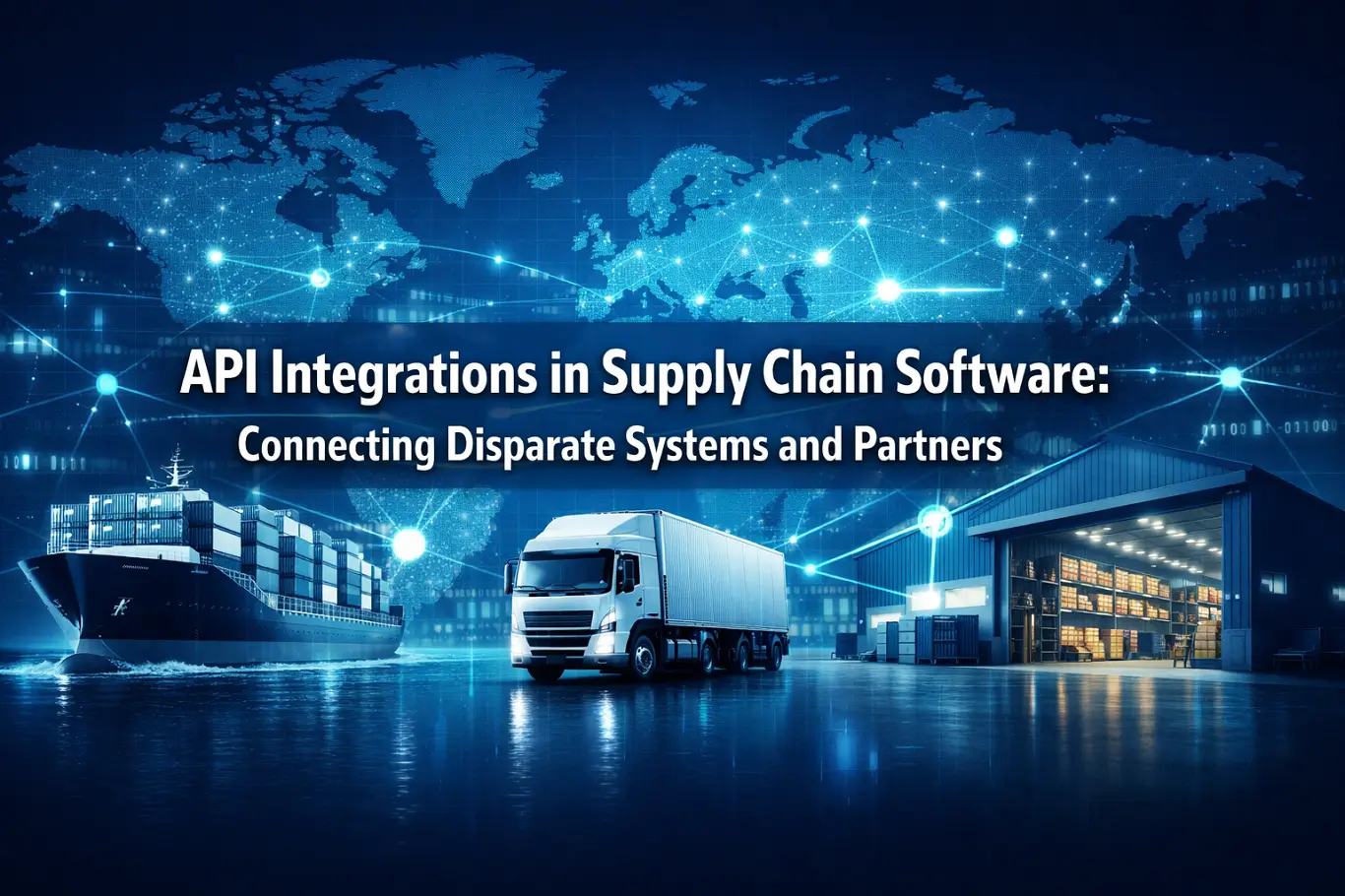
Enter API integrations. Application Programming Interfaces (APIs) are the invisible threads weaving together the fragmented landscape of global logistics. By connecting disparate systems—from Warehouse Management Systems (WMS) to Transportation Management Systems (TMS) and external partner portals—APIs are revolutionizing how information, and ultimately goods, flow across the world.
1. What are API Integrations in the Supply Chain?
At its simplest, an API (Application Programming Interface) is a set of protocols and tools that allows one software application to “talk” to another. In the supply chain context, think of an API as a digital waiter. You (the user/system) provide an order (a request for data), the waiter takes that request to the kitchen (the server or partner system), and brings back your meal (the data or the completed action).
For a deeper dive into the mechanics of how these connections function, understanding API integrations is essential for any logistics professional looking to modernize their tech stack. It provides the foundational knowledge needed to transition from manual, paper-based processes to an automated, data-driven environment.
API vs. EDI: The Great Shift
For years, EDI (Electronic Data Interchange) was the gold standard for supply chain communication. While EDI is still widely used—particularly by large retail giants—it operates on a “batch” processing model. Data is collected and sent in chunks at scheduled intervals.
APIs, conversely, offer real-time data exchange. When a customer clicks “buy” on a website, an API can instantly update inventory levels across the entire network, trigger a fulfillment request at the warehouse, and alert a carrier for pickup. This shift from “delayed” to “instant” is what distinguishes modern, agile supply chains from their legacy counterparts.
2. The Critical Need for Connectivity in Modern Logistics
The supply chain of the 2020s is no longer a linear chain; it is a complex, multi-layered web. Without seamless integration, companies face several “friction points” that can lead to catastrophic failures.
Eliminating Data Silos
In many traditional organizations, the warehouse team uses one software, the procurement team uses another, and the finance department uses a third. These “silos” prevent a holistic view of the business. API integrations break down these walls, ensuring that the procurement team knows exactly how much stock is in the warehouse before they place a new order.
Meeting the “Amazon Effect”
Consumer expectations have shifted. Whether in B2C or B2B, customers expect real-time updates, transparent pricing, and rapid delivery. Meeting these expectations is impossible if your data is trapped in disconnected systems. APIs allow you to pipe live tracking data directly into customer portals, providing the transparency that modern buyers demand.
Mitigating Global Volatility
From port strikes to geopolitical shifts, supply chains are under constant threat of disruption. A connected system allows for “Resiliency through Visibility.” If a port is blocked, an integrated system can automatically identify alternative routes by pulling real-time data from various shipping partners, allowing for a pivot in hours rather than days.
3. Key Benefits of API Integrations
Integrating your supply chain software through APIs provides a range of strategic advantages that directly impact the bottom line.
A. Real-Time Data Visibility
In a volatile market, information is currency. APIs provide real-time updates on inventory levels, shipment locations, and port delays. This allows managers to make informed decisions based on live data rather than week-old reports.
B. Increased Operational Efficiency and Automation
Automation is the primary byproduct of integration. When your TMS is integrated with your carriers via API, several labor-intensive tasks disappear:
- Freight Tendering: Automatically send shipment offers to preferred carriers.
- Document Generation: Instantly produce digital Bills of Lading (BOL) and customs paperwork.
- Invoice Auditing: Automatically match carrier invoices against quoted rates to ensure accuracy.
C. Scalability and Flexibility
As your business grows, you may need to add new partners, carriers, or warehouses. API-led connectivity allows you to “plug and play” new systems. Unlike rigid legacy integrations, modern RESTful APIs are designed to be flexible, making it easier to scale your operations globally without rewriting your entire software core.
D. Improved Partner Collaboration
Supply chains involve a massive ecosystem of vendors, suppliers, and 3PLs. APIs facilitate a “single source of truth.” When all partners are connected to the same data stream, disputes over inventory counts or delivery times vanish, fostering more collaborative, trust-based relationships.
4. Common Use Cases: Where APIs Drive Value
1. TMS and Carrier Integration
This is the most common use case. By connecting a Transportation Management System (TMS) to a network of carriers (LTL, FTL, and Parcel), companies can compare rates in real-time, book shipments instantly, and receive automated “Track and Trace” updates.
2. WMS and E-commerce Synchronization
For retailers, the link between the Warehouse Management System (WMS) and the e-commerce storefront is vital. APIs ensure that when an item is sold, the inventory is immediately deducted from the warehouse records. This prevents the dreaded “out of stock” email that ruins customer loyalty.
3. ERP and Financial Systems
Integrating supply chain software with an ERP (like SAP, NetSuite, or Microsoft Dynamics) ensures that procurement costs and shipping fees are automatically recorded. This provides an accurate, real-time view of “Landed Cost,” helping finance teams understand true profit margins on every SKU.
5. Overcoming the Challenges of API Implementation
While the benefits are clear, the path to a fully integrated supply chain has its hurdles.
Security and Data Privacy
Opening up your systems to external partners requires robust security. Utilizing OAuth 2.0, end-to-end encryption, and secure API gateways is essential to protect sensitive commercial data from cyber threats.
Legacy System Compatibility
Many established companies still rely on “on-premise” legacy software that wasn’t built for the cloud. These systems often require a “middleware” layer to translate legacy protocols into API-friendly formats.
The Need for Technical Expertise
Building and maintaining these connections is not a simple task. It requires a deep understanding of both logistics workflows and software engineering. Navigating these complexities often requires the expertise of a dedicated supply chain software development company that specializes in custom logic, secure data protocols, and complex system architecture. Without professional guidance, companies often end up with “spaghetti code” that is difficult to maintain and prone to breaking during software updates.
6. Best Practices for a Successful Integration Strategy
To maximize the ROI of your integration project, follow these industry best practices:
- Prioritize “API-First” Vendors: When selecting new software, choose vendors that offer well-documented, open APIs. Avoid “closed” systems that charge exorbitant fees for data access or lock you into their ecosystem.
- Focus on Data Standardization: Ensure your data is cleaned and standardized. If one system uses “lbs” and the other uses “kg,” your API will transmit incorrect information. Standardizing units of measure and SKU formats is a prerequisite for integration.
- Start with High-Impact Use Cases: Don’t try to integrate your entire global network at once. Start with a high-impact pilot—such as integrating your primary carrier—and then expand to other partners once you’ve proven the value.
- Implement Robust Monitoring: APIs can “break” when one party updates their software. Use monitoring tools to alert your IT team the moment a connection fails, ensuring minimal downtime.
7. The Future: AI, IoT, and the Autonomous Supply Chain
The evolution of API integrations is leading us toward the era of the “Autonomous Supply Chain.”
- IoT Integration: Sensors on shipping containers can send temperature, humidity, and shock data via APIs directly to your WMS. If a refrigerated container fails, the system can automatically trigger a replacement order before the goods even reach the port.
- AI-Driven Decision Making: As APIs funnel massive amounts of data into central systems, Artificial Intelligence (AI) can analyze this data to predict future disruptions. For example, an AI could see a trend of delays at a specific port and automatically suggest rerouting future shipments.
- Blockchain and Smart Contracts: In the future, APIs may connect supply chain systems to blockchain ledgers. This would enable “Smart Contracts” that automatically release payment to a carrier the moment an API confirms a successful, damage-free delivery.
Conclusion: The Connected Supply Chain is No Longer Optional
The digital transformation of the supply chain is no longer a futuristic concept—it is a current reality. API integrations in supply chain software are the key to unlocking the resilience and agility required to survive in today’s market. By connecting disparate systems and partners, businesses can eliminate blind spots, reduce manual labor, and provide the transparency that modern customers demand.
The transition from siloed, legacy operations to a connected, API-driven ecosystem may seem daunting, but the cost of inaction is much higher. Disconnected data leads to lost shipments, unhappy customers, and wasted revenue.
Companies that embrace connectivity today—leveraging the right technology and the right development partners—will be the ones leading the market tomorrow, armed with the agility to pivot and the data-driven insights to succeed in an ever-changing world.