 Akshay Tyagi
In the fast-paced digital landscape, the battle for user attention is won and lost on mobile devices. For years, businesses faced a difficult dilemma: build a responsive website that relies on a consistent internet connection, or invest heavily in developing native mobile apps for iOS and Android to gain performance and engagement.
But what if you didn’t have to choose? What if you could offer the immersive, high-speed experience of a native app with the reach and discoverability of a standard website?
Widely regarded as the next evolution of mobile web development, PWAs are transforming how businesses interact with customers. From retail giants like Starbucks to social platforms like Pinterest, major brands are shifting their strategy toward this hybrid technology to solve the problem of low conversion rates on mobile web.
If you are a business owner, developer, or marketer, understanding PWAs is no longer optional—it is essential. In this comprehensive guide, we will explore what Progressive Web Apps are, the technology behind them, and why they are critical for your digital growth in 2026.
What is a Progressive Web App (PWA)?
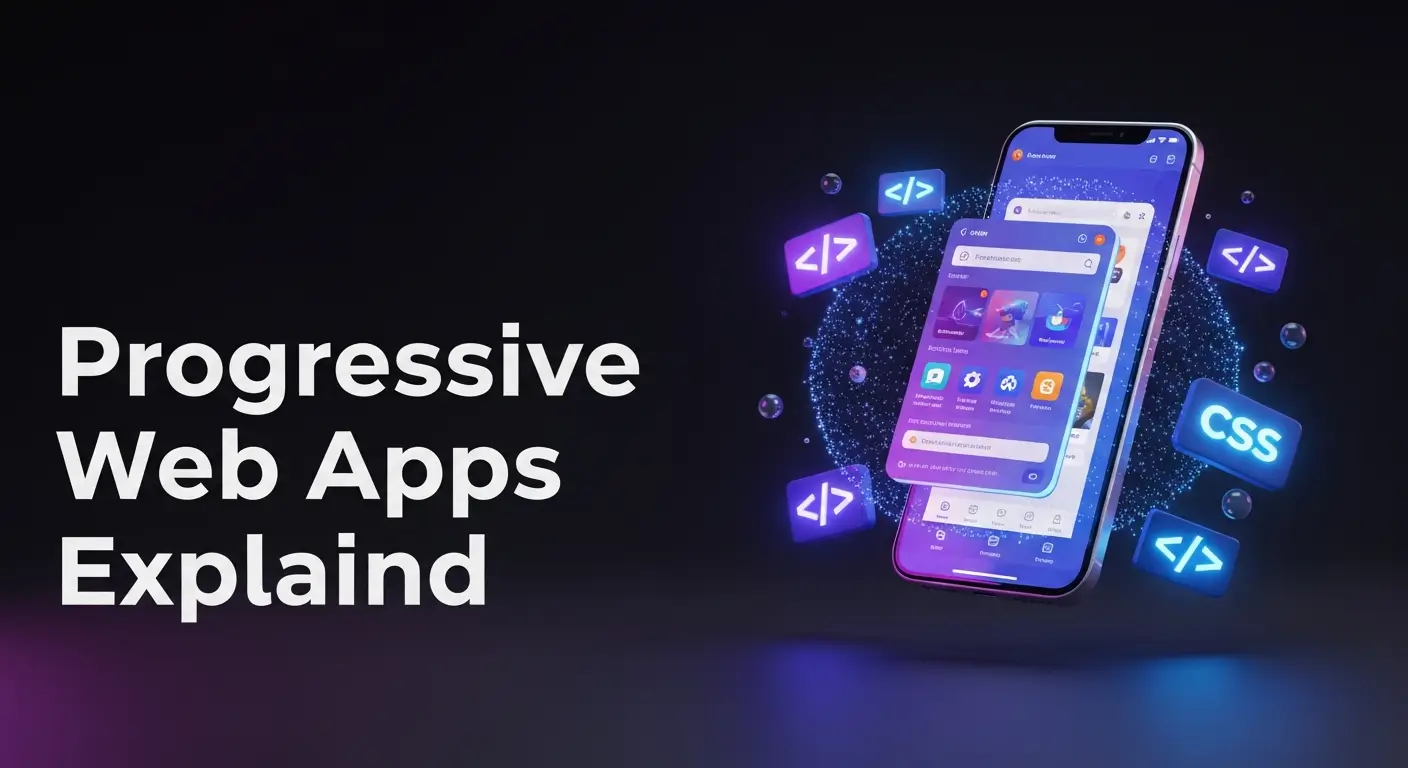
At its core, a Progressive Web App is a website that behaves like a native mobile app. Built using standard web technologies including HTML, CSS, and JavaScript, PWAs offer functionality traditionally reserved for native applications—such as push notifications, offline access, and hardware integration—directly through a web browser.
Think of a PWA as the “best of both worlds.”
- Like a Website: It is discoverable via search engines (SEO-friendly), requires no installation from an app store, and is accessible via a simple URL.
- Like an App: It loads instantly, functions offline, sends push notifications, and can be added as an icon to a user’s home screen.
Google, a major proponent of this technology, defines PWAs based on three core pillars:
- Reliable: They load instantly, even in uncertain network conditions, ensuring users never see the “downasaur” (the offline dinosaur).
- Fast: They respond quickly to user interactions with silky-smooth animations and no janky scrolling.
- Engaging: They feel like a natural app on the device, offering an immersive full-screen user experience.
Under the Hood: How Do PWAs Work?
To understand why PWAs are so powerful, we need to look briefly at the technology that drives them. You don’t need to be a coder to understand the concept, but knowing the mechanics helps explain the business value and why they outperform standard responsive sites.
There are three technical components that distinguish a PWA from a standard website:
1. The Service Worker
This is the technical game-changer. A service worker is a script that runs in the background, separate from the web page. It acts as a proxy between the web browser and the network.
This technology enables offline capabilities and background syncs. When a user visits the PWA for the first time, the service worker caches (saves) key assets like the layout, images, and content. When the user returns, the service worker loads content from the cache instantly, rather than waiting for the network to fetch data. This creates the “instant load” feel, even on slow 3G connections.
2. The Web App Manifest
The manifest is a simple JSON file that tells the browser about your web application and how it should behave when “installed” on the user’s mobile device. It dictates the name, the app icon, and the theme colors. Crucially, it allows the app to launch in full-screen mode (hiding the browser URL bar and navigation buttons), providing that premium native look and feel.
3. HTTPS (Secure Context)
Security is non-negotiable in modern web standards. Because service workers have the ability to intercept network requests, PWAs must be served over a secure HTTPS connection. This ensures that the user’s data remains safe from man-in-the-middle attacks and builds trust with your audience.
The PWA Advantage: Why They Matter for Business
Why are companies like Uber, Twitter, and Spotify investing heavily in this tech? The answer lies in the metrics: User Acquisition, Engagement, and Conversion.
Here is why Progressive Web Apps matter in the current digital economy:
1. Bypassing “App Store Fatigue”
Getting a user to download a native app is incredibly difficult. It requires high friction: searching the store, waiting for the download, accepting permissions, and using up precious storage space. Statistics show that the majority of smartphone users download zero new apps per month.
PWAs eliminate this friction. Users visit your website and are prompted to “Add to Home Screen.” The installation is instantaneous, bypassing the Apple App Store or Google Play Store entirely. This dramatically lowers the Customer Acquisition Cost (CAC).
2. Superior Performance and SEO
Speed equates to revenue. Google has made it clear that page speed is a ranking factor (Core Web Vitals). Because PWAs rely on aggressive caching strategies, they load much faster than traditional mobile sites.
Furthermore, unlike native apps, PWAs are fully indexable by search engines. The content inside your PWA can be crawled by Google bots, helping you rank for relevant keywords. This creates a powerful synergy: the discoverability of the web combined with the retention capabilities of an app.
3. Offline Capabilities
Have you ever tried to use a website on a subway or in an area with spotty reception? Usually, the connection times out.
PWAs solve this. Because the “app shell” (the design layout) and key content are stored on the device, users can still browse products, read articles, or review previous data even without an internet connection. Once the connection is restored, the app updates in the background. This reliability keeps users engaged when they would otherwise bounce.
4. Push Notifications Drive Retention
One of the most potent tools in a marketer’s arsenal is the push notification. Previously, this was exclusive to native apps. PWAs allow you to send personalized notifications to users directly through the browser. Whether it’s an abandoned cart reminder or a breaking news alert, push notifications have been shown to increase engagement rates by up to 88%.
Real-World Success Stories
The theoretical benefits of PWAs are compelling, but the real-world application is even more impressive. To truly understand the rise of Progressive Web Apps, we simply need to look at the data from brands that have already made the switch.
- Starbucks: The coffee giant built a PWA to serve emerging markets where internet access was spotty. The result? The PWA is 99.84% smaller than their native iOS app, making it a favorite for users with limited storage. They saw a 2x increase in daily active users who placed orders via the web.
- Pinterest: After realizing their mobile web experience was slow and converting poorly, Pinterest rebuilt it as a PWA. Time spent on the site increased by 40%, and ad revenue generated by users increased by 44%.
- Tinder: Their PWA cut load times from 11.91 seconds to 4.69 seconds. It is 90% smaller than their native Android app, leading to increased swipe rates from web users who hadn’t downloaded the main app.
PWA vs. Native Apps vs. Responsive Sites
To clarify where PWAs fit in your strategy, let’s compare the three main options available to businesses today:
| Feature | Traditional Website | Native App | Progressive Web App |
| Download Required | No | Yes (High Friction) | No (Instant Install) |
| Offline Access | No | Yes | Yes |
| Push Notifications | No | Yes | Yes |
| SEO Indexable | Yes | No (mostly) | Yes |
| Development Cost | Low | High | Medium |
| Storage Usage | None | High (100MB+) | Low (<5MB) |
Is a PWA Right for Your Business?
While PWAs are revolutionary, they aren’t a magic bullet for every single scenario. However, they are the ideal solution if:
- You have a limited budget: You can’t afford to build native apps for iOS and Android simultaneously but need a strong mobile presence.
- Your content updates frequently: E-commerce stores, news outlets, and blogs benefit immensely from the caching and notification features.
- Time-to-market is critical: You need to launch a Minimum Viable Product (MVP) quickly to test a market without waiting for App Store approval processes.
- You rely on SEO: You need organic search traffic to drive user acquisition, which native apps cannot provide efficiently.
A Note on Development:
While the barrier to entry is lower than native apps, building a high-quality PWA requires specific knowledge of service workers, caching strategies, and manifest implementation. Many businesses make the mistake of simply wrapping a website in a container and calling it a PWA. To get the full benefits—offline mode, background sync, and native feel—you need expert implementation. This is where partnering with a specialized Progressive Web App development company becomes a strategic investment, ensuring the technical complexities are handled correctly so you can focus on growth.
The Future is Progressive
The line between the web and apps is blurring. Users demand speed, reliability, and smooth experiences, regardless of the device they are using. Progressive Web Apps are not just a trend; they are the new standard for the mobile web.
By adopting PWA technology, you are future-proofing your digital presence. You are ensuring that your users have the best possible experience whether they are on a high-speed Wi-Fi connection in New York or a 3G data plan in a rural area.
Don’t let your competitors beat you to the punch. Improving your mobile user experience is the single most effective way to boost conversion rates in 2024 and beyond.
Ready to Upgrade Your Digital Strategy?
Is your current mobile website costing you customers? It’s time to stop losing traffic to slow load times and clunky interfaces.
Contact our team of development experts today for a free consultation. Let’s discuss how we can transform your website into a high-performance Progressive Web App that drives engagement and accelerates revenue.