 Akshay Tyagi
In the hyper-competitive world of ecommerce, the sale doesn’t end when the “Order Confirmed” page appears. In fact, for the customer, the most critical part of the journey is just beginning: the wait.
Historically, this “post-purchase” phase has been a black hole for brands. Customers are often redirected to sterile, third-party carrier websites (like FedEx, UPS, or DHL) that offer little more than cryptic location codes and vague delivery windows. This lack of transparency leads to one of the most expensive headaches in retail: WISMO (Where Is My Order?) inquiries.
Industry data shows that up to 50% of all customer service tickets are related to order status. However, forward-thinking brands are flipping the script. By implementing personalized tracking pages, businesses are seeing a staggering 40% reduction in support calls, while simultaneously boosting brand loyalty and driving repeat revenue.
This article explores how personalized tracking pages work, the psychology behind why they reduce support volume, and how you can implement this strategy to transform your customer experience.
The “WISMO” Problem: Why Your Support Team is Drowning
Before we look at the solution, we must understand the “WISMO” phenomenon. The moment a customer clicks “Buy,” a psychological clock starts ticking. This is often referred to as post-purchase anxiety.
The customer has given you their money, and they are now in a state of vulnerability, hoping the product arrives as described and on time. When a brand fails to communicate effectively during this window, the customer’s first instinct is to reach out.
The Hidden Costs of Support Tickets
Every time a customer calls, emails, or starts a live chat to ask about their order, it costs your business money. Estimates suggest that the average cost of a manual customer service interaction ranges from $5 to $12 per ticket.
When 40% to 60% of your tickets are simple status checks, you aren’t just losing money on labor; you are preventing your support team from solving complex issues that actually require a human touch. Reducing this volume isn’t just a convenience—it’s a financial imperative.
What is a Personalized Tracking Page?
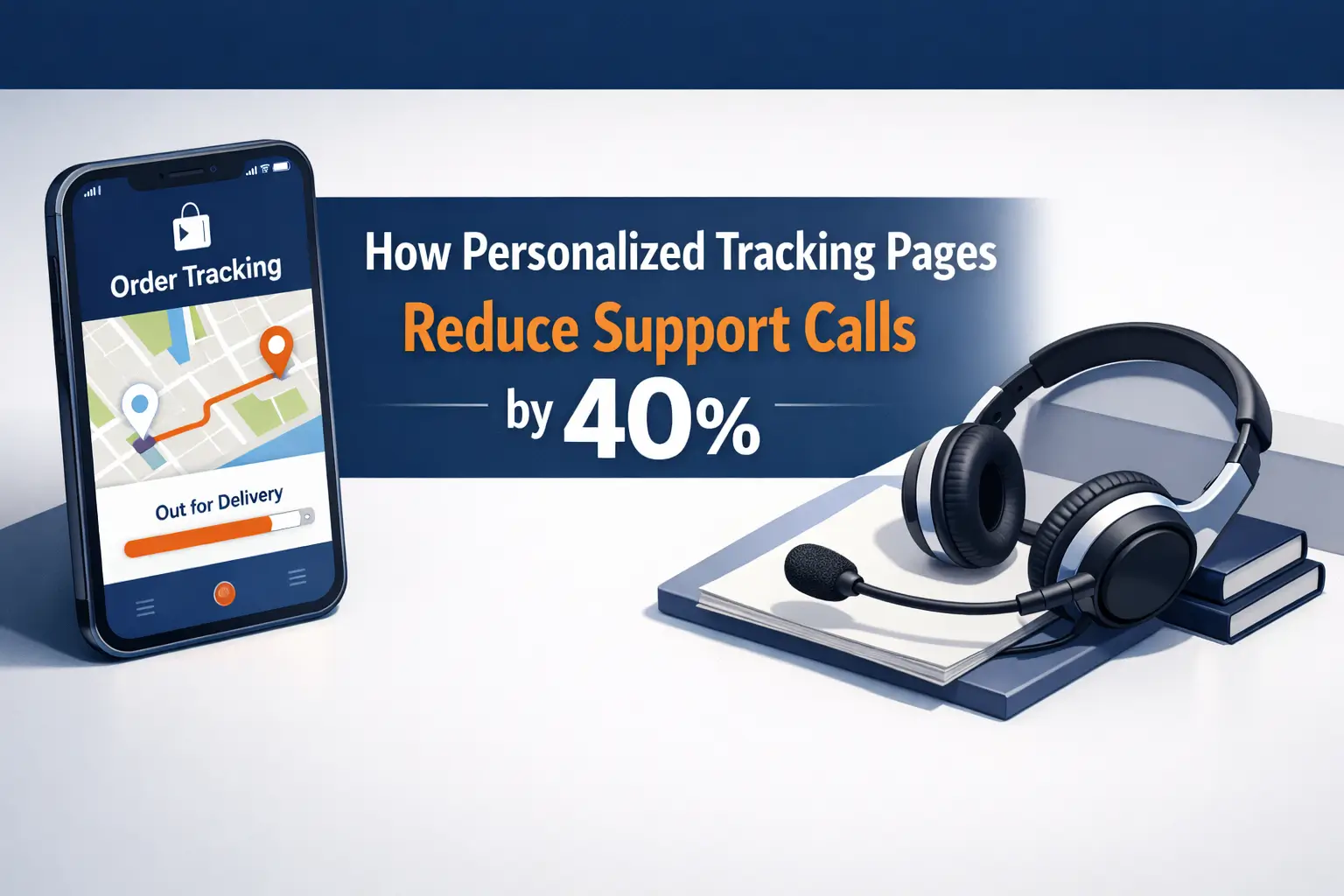
A personalized tracking page is a branded, hosted environment within your own website that displays real-time shipping data. Unlike the generic carrier tracking page, a personalized page keeps the customer within your ecosystem.
Key features of a high-performing tracking page include:
- Brand Consistency: Your logo, colors, and fonts to maintain trust.
- Real-Time Progress Bars: Visual representations of “Ordered,” “Shipped,” “Out for Delivery,” and “Delivered.”
- Estimated Delivery Dates (EDD): Dynamic dates that update based on carrier delays.
- Product Recommendations: Suggested items based on the current purchase.
- Direct Support Links: Self-service FAQs specifically related to shipping and returns.
How Personalized Tracking Pages Reduce Support Calls by 40%
Reducing support volume by nearly half sounds like a bold claim, but the mechanics are simple. It boils down to proactive communication and operational transparency.
1. Eliminating the Information Gap
Generic carrier pages are often delayed or difficult to interpret. A personalized tracking page pulls data directly from carrier APIs but “translates” it into customer-friendly language. By providing a clear, visual timeline, you satisfy the customer’s need for information before they feel the urge to ask a human for help.
2. Centralizing the Experience
When a customer has to leave your site to check a tracking number on a third-party site, they feel disconnected from your brand. If there is a delay, they blame the carrier—but they callyou. By hosting the tracking page on your domain (e.g., track.yourbrand.com), you maintain control. You can add a “Shipping FAQ” sidebar that addresses common issues like “Why hasn’t my tracking updated in 24 hours?”
3. Proactive Notifications via SMS and Email
The best tracking pages don’t wait for the customer to visit them. They are paired with automated triggers. When a package hits a milestone (like “Out for Delivery”), the system sends a branded email or SMS with a link back to the personalized tracking page. This proactive loop reduces the “anxiety gap” and keeps the customer informed in real-time.
4. Setting Realistic Expectations with EDD
One of the primary reasons for support calls is a missed delivery date. Personalized tracking pages use machine learning and carrier data to provide anEstimated Delivery Date (EDD). If a storm delays a shipment, the page updates automatically. When customers see a live update reflecting a delay, they are significantly less likely to call support because they feel the situation is being handled.
The Psychology of the Post-Purchase Experience
To understand why these pages are so effective, we have to look at Operational Transparency.
Harvard Business School research suggests that when people can see the work being done behind the scenes, they value the service more and are more patient. A tracking page that shows “Order being picked,” “Quality check completed,” and “Label printed” provides a window into your warehouse.
This transparency builds trust. When a customer trusts the process, their anxiety levels drop, and their “need to know” is satisfied by the interface rather than a phone call.
Strategic Implementation: Choosing the Right Path
When it comes to deploying these pages, businesses usually face a choice between off-the-shelf SaaS plugins or custom-built solutions. While small businesses might thrive with basic plugins, enterprise-level retailers with complex supply chains often require a more robust, tailored approach.
To achieve seamless integration between your Warehouse Management System (WMS), ERP, and front-facing customer portal, many brands partner with an experienced logistics software development company. A professional development team can ensure that the data flowing from multiple carriers and international hubs is aggregated accurately, providing a single source of truth for the customer. This level of technical sophistication is often what separates a standard tracking page from one that truly eliminates support friction.
Beyond Support: Turning Tracking Pages into Revenue Engines
While a 40% reduction in support calls is a massive win for your bottom line, personalized tracking pages also offer a unique marketing opportunity.
High Engagement Rates
The “Track Your Order” email has one of the highest open rates in ecommerce—often exceeding70% to 80%. Furthermore, customers check their tracking status an average of 3 to 5 times per order.
By sending these users to a branded page instead of a carrier site, you are capturing high-intent traffic. Here is how to capitalize on it:
- Cross-Selling and Upselling: Use AI-driven widgets to show “Complete the Look” or “Customers Also Bought” items. Since the customer is already excited about their purchase, they are in a prime psychological state to buy again.
- Social Proof and User-Generated Content (UGC): Display your Instagram feed or customer reviews on the tracking page to reinforce that they made a great decision.
- Loyalty Program Integration: Show the customer how many points they earned with their current order and what they can redeem them for next time.
Best Practices for Designing Your Tracking Page
If you want to achieve that 40% reduction in support tickets, the design must be functional and user-centric.
Mobile-First Design
The vast majority of tracking clicks happen on mobile devices while people are on the go. If your tracking page isn’t responsive or takes too long to load, the customer will give up and call your support line instead.
Clear “Self-Service” Options
Don’t hide your contact information, but do surround it with self-service tools. Include a “Common Questions” section directly on the tracking page:
- “How do I change my delivery address?”
- “What do I do if my package is marked delivered but isn’t here?”
- “How do I start a return?”
Real-Time Map Tracking
If possible, incorporate a map view. There is something inherently satisfying and reassuring about seeing a dot move across a map. It provides a level of “concreteness” that a text-based status like “In Transit” lacks.
The ROI of Personalized Tracking
Let’s look at the math for a mid-sized ecommerce brand:
- Monthly Orders: 5,000
- Average WISMO Tickets (20% of orders): 1,000
- Cost Per Ticket: $8
- Monthly Support Spend on WISMO: $8,000
By implementing a personalized tracking page and reducing those calls by 40%, the brand saves $3,200 per month in support costs alone. When you factor in the additional revenue from cross-selling on that page and the increased Customer Lifetime Value (CLV) due to a better experience, the return on investment is immediate and substantial.
Conclusion
The period between “Buy” and “Deliver” is the most emotional part of the customer journey. Leaving that experience in the hands of a third-party carrier is a missed opportunity at best and a customer service nightmare at worst.
By implementing personalized tracking pages, you address the root cause of customer anxiety. You provide the transparency they crave, the self-service tools they need, and the brand consistency they expect.
Reducing customer support calls by 40% isn’t just about cutting costs—it’s about building a foundation of trust that turns one-time buyers into lifelong advocates. In the modern ecommerce landscape, your shipping experienceisyour product. Make sure it’s a good one.