 Akshay Tyagi
In the high-stakes, high-velocity world of global logistics, data is the new oil, but relationships are the engine. Whether you are running a freight brokerage, a 3PL (Third-Party Logistics) provider, or a large-scale trucking company, the complexity of your operations transcends simple sales tracking. You aren’t just moving goods from point A to point B; you are managing a delicate, volatile ecosystem of shippers (customers) and carriers (vendors).
For years, the industry has relied on a fragmented approach to technology. Sales teams use one platform, dispatchers use another, and accounting is stuck in a third. While generic tools like Salesforce or HubSpot dominate the general business market, they often fail to capture the nuance of the supply chain. They view the world through a linear lens, but logistics is circular.
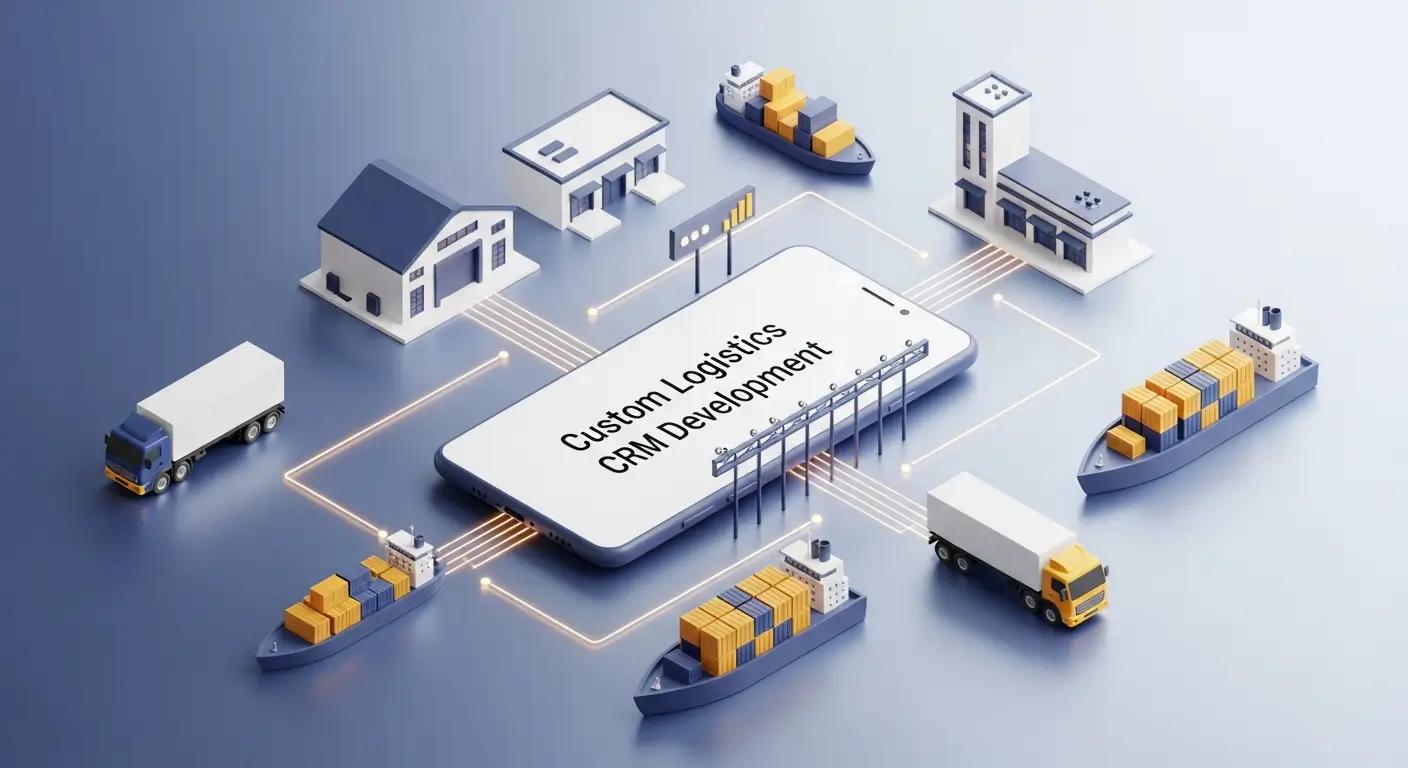
This is where Custom Logistics CRM Development becomes not just a luxury, but a strategic necessity. By building a bespoke solution, logistics companies can bridge the gap between Customer Relationship Management (CRM) and Vendor Relationship Management (VRM), creating a unified platform that drives efficiency, visibility, and profitability.
The Problem with “One-Size-Fits-All” in Logistics
Why do so many logistics firms struggle with off-the-shelf software? The answer lies in the workflow. A standard CRM is built for a linear sales funnel:Lead > Opportunity > Closed Won. Once the deal is signed, the CRM’s job is usually done.
However, a logistics transaction is multi-layered. Closing a deal with a shipper is only the beginning of the lifecycle. To execute a single load, you must:
- Source a Carrier: Find a vendor capable of moving the freight.
- Negotiate Rates: Balance the shipper’s budget with the carrier’s asking price to secure a margin.
- Track the Shipment: Monitor real-time location and handle exceptions (breakdowns, delays).
- Manage Documentation: Collect Bills of Lading (BOL), Proof of Delivery (POD), and rate confirmations.
- Financial Settlement: Invoice the customer and pay the carrier, often on different terms.
When you try to shoehorn these complex, interdependent processes into a generic CRM, you end up with “Frankenstein” systems—a cobweb of spreadsheets, email chains, and disconnected software that leads to data silos, communication errors, and eventually, lost revenue.
The Strategic Advantage of Custom Development
Developing a custom CRM allows you to map the software exactly to your operational blueprint. It transforms your CRM from a digital Rolodex into a central command center.
1. Centralized Data Architecture
In logistics, speed is currency. If a customer calls asking for a status update, your representative shouldn’t have to put them on hold to call a dispatcher, who then has to call a driver. A custom solution ensures that sales, dispatch, and accounting are looking at the same real-time data. This “single source of truth” eliminates the friction that slows down operations.
2. Scalability Without Penalty
Generic SaaS (Software as a Service) platforms often charge per user. As your fleet grows or you hire more brokers, your costs skyrocket. A custom CRM scales with you. You own the code, meaning you aren’t penalized for growth. Furthermore, you can add modules—such as warehouse management, claims processing, or fleet maintenance—as your business model evolves, without waiting for a third-party vendor to release them.
3. Intellectual Property and Valuation
When you build your own software, you are building an asset. A proprietary technology stack increases the valuation of your logistics firm. It proves to investors and buyers that your operations are systematic and not reliant on the knowledge inside a few employees’ heads.
Mastering the “Two-Sided” Relationship: Customers & Vendors
The true power ofCustom Logistics CRM Developmentlies in its ability to manage two distinct audiences simultaneously. A logistics CRM is actually a hybrid system, merging traditional CRM with robust VRM capabilities.
The Customer Side (Shippers)
For your customers, the CRM serves as an engagement and retention engine. In a market where price is often the deciding factor, service is the differentiator.
- 360-Degree Customer View: Beyond just contact info, a custom CRM tracks preferred lanes, average volume, payment history, and commodity types. This allows for predictive sales—calling a customer right before their produce season starts, rather than waiting for them to call you.
- Automated Quoting: By integrating with historical pricing data and current market indices, your CRM can generate instant quotes for customers. Speed to quote is often the primary factor in winning a load.
- Self-Service Portals: A custom build allows you to offer a white-labeled portal where customers can log in, book shipments, and track cargo in real-time. This transparency builds trust and significantly reduces call volume for your support team.
The Vendor Side (Carriers & Drivers)
This is where generic CRMs fail completely. In logistics, your vendors are partners, but they also represent risk. You need to manage them just as aggressively as your customers.
- Carrier Compliance Monitoring: Your system can automatically flag carriers with expired insurance, bad safety ratings, or poor performance history. This mitigates risk and ensures you only broker loads to reliable partners.
- Lane Preferences and Capacity: A custom CRM can tag carriers by their preferred routes and equipment types (Reefer, Flatbed, Dry Van). When a load opens up from Chicago to Miami, the system can instantly identify the top 10 carriers who prefer that lane, automating the sourcing process.
- Performance Scorecards: You can program the system to automatically rate vendors based on on-time delivery percentages and communication scores. This data provides leverage during rate negotiations.
Essential Features for a Modern Logistics CRM
If you are embarking on the development journey, simply replicating a spreadsheet isn’t enough. To gain a competitive edge, your scope of work must include these critical features:
Seamless TMS Integration
Your CRM cannot live in a vacuum. It must integrate bi-directionally with your Transportation Management System (TMS). When a lead becomes a customer in the CRM, the data should flow automatically into the TMS to execute the order. Conversely, when a load is delivered in the TMS, the status should update in the CRM to trigger a follow-up sales call.
Automated Document Management
Logistics is notoriously paper-heavy. Your custom solution should include drag-and-drop functionality for associating documents with specific Order IDs. More importantly, it can utilize OCR (Optical Character Recognition) to read data from BOLs and invoices, automatically updating fields in the database and reducing manual entry errors.
Mobile Accessibility
Freight moves 24/7, and so do your agents and drivers. A desktop-only application is a shackle. A mobile-responsive design or a companion app is essential. It allows sales reps to approve rates while at a conference and allows drivers to upload proof of delivery photos immediately upon arrival.
Advanced Reporting & Analytics
Ditch the Excel pivots. A custom dashboard should provide real-time visualization of your business health:
- Gross Margin per Load/Lane: Identify which routes are making money and which are bleeding cash.
- Sales Rep Performance: Gamify the sales floor with live leaderboards.
- Carrier Utilization: See which carriers are moving the most freight for you and negotiate volume discounts.
The Path to Development: Choosing the Right Expertise
Building a system of this magnitude is not a task for a generalist freelance developer. It requires a deep understanding of API integrations (PC Miler, DAT, FMCSA data), cloud security, and database architecture.
This is where selecting the right partner is critical. By engaging with a firm that specializes in logistics software development services, you ensure that the development team understands the difference between LTL and FTL, or why detention time tracking is a critical feature. Domain expertise translates to faster development cycles and a product that solves actual industry problems, rather than theoretical ones.
The ROI of Custom Development
The initial investment in custom software is undeniably higher than the first month of a SaaS subscription. However, the Return on Investment (ROI) over a 2-3 year period is substantial and multifaceted.
- Operational Efficiency: Automating manual data entry and document retrieval can save your team 20+ hours a week per employee. This allows your existing staff to handle 30% more volume without burnout.
- Customer Retention: Transparency and speed build trust. A smooth digital experience makes it harder for competitors to poach your clients, increasing Customer Lifetime Value (CLV).
- Reduced Software Bloat: By consolidating your CRM, VRM, and document management into one custom solution, you eliminate subscription fees for multiple overlapping third-party tools.
Future-Proofing with AI
Finally, building your own platform opens the door to Artificial Intelligence. You aren’t waiting for a vendor’s roadmap; you can innovate now. Custom CRM development can incorporate AI to predict market rates based on weather and traffic, optimize routes to save fuel, and use chatbots to handle routine vendor inquiries, freeing up your humans to handle complex negotiations.
Conclusion
In the modern logistics industry, the company with the best data and the strongest relationships wins. Relying on generic software limits your ability to adapt to the chaotic nature of supply chains.
Custom Logistics CRM Development offers a path out of the chaos. It allows you to build a digital infrastructure that harmonizes the needs of your customers with the capabilities of your vendors. It turns your operation into a well-oiled machine, reduces administrative overhead, and provides the visibility required to scale in a competitive market.
Don’t let your software dictate your workflow. Build software that works for you.
Ready to Optimize Your Supply Chain?
If you are tired of workarounds, data silos, and software that doesn’t fit, it’s time to take control of your technology strategy.
Contact Our Team Today to schedule a free consultation. Let’s discuss how we can engineer a custom CRM solution tailored specifically to your logistics workflows, helping you close more deals, manage carriers with ease, and drive your business forward.